An accountant at the counter.

A notebook writes what you tell it. Shopkeeper connects each sale to the shelf, the drawer and the cost.

Request a demo

The whole shop.
Three connected journeys.

A sale is one moment. Shopkeeper follows the work before it and the responsibilities after it.

The shopkeeper’s journey

From setting up the shop to closing the drawer, keep the work and the books together.

  1. Set up the shop

    Add products, opening stock and customers. Review staff permissions and tax settings. CSV import is in Pilot; opening customer dues are not available yet.

    See how it works ↗
  2. Open and sell

    Count the cash, serve the counter, weigh loose goods and take cash, bKash, Nagad or card.

    See how it works ↗
  3. Keep the day moving

    Receive deliveries, check packed orders, record expenses and review requests that need your approval.

    See how it works ↗
  4. Close with a clear picture

    Count the drawer, explain any difference and close the day. Review sales, profit, dues and each fund.

    See how it works ↗
A product’s journey

Know what came in, what it really cost, what sold and what needs buying again.

  1. Buy and receive

    Record the delivery, free goods, freight and supplier discounts. These feed the moving average cost.

    See how it works ↗
  2. Stock and price

    Keep items, brands and packs together. See sacks plus loose stock and review suggested prices when margins fall.

    See how it works ↗
  3. Sell and fulfil

    Sell by piece, weight or amount. Pack and check orders, sell what is ready and leave the rest for later.

    See how it works ↗
  4. Return and replenish

    A return reverses the original profit and tax. Use the reorder screen to plan the next purchase; slow-stock insight is in Pilot.

    See how it works ↗

A customer’s journey

From the first bill to the last taka collected, keep the customer’s story in one place.

  1. Know the customer

    Keep a customer record, use their usual brand and repeat a regular customer’s last order.

    See how it works ↗
  2. Order, pay or leave a deposit

    Take payment across supported funds. Hold advance money for goods still to come, then use it, refund it or retain it as credit.

    See how it works ↗
  3. Invoices, receipts and credit

    Print sale bills in 80 mm, A5 or A4, save a PDF or open WhatsApp sharing. Receipts follow your tax setting. Set credit limits and due dates, then follow the ageing list.

    See how it works ↗
  4. Collect and handle returns

    Collections settle the oldest dues first. Send a WhatsApp reminder; refund a return by cash or bKash, or keep the amount as credit.

    See how it works ↗

One sale connects the shop.

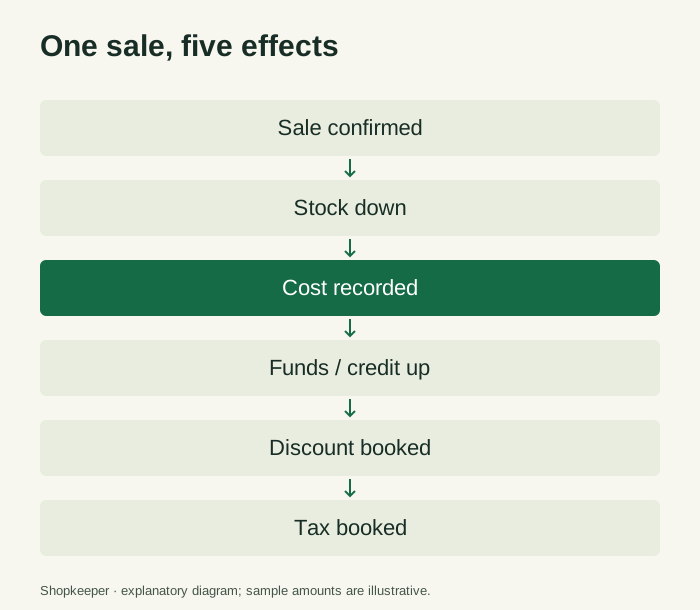
The sale, cost, stock, discount, tax and payment are recorded together. There is no second notebook to catch up with at night.

One sale. Five effects.

One confirmed sale
All or nothing
Stock downCost recordedFunds / credit upDiscount bookedTax booked
The whole sale is recorded together, or none of it is. Download diagram ↗

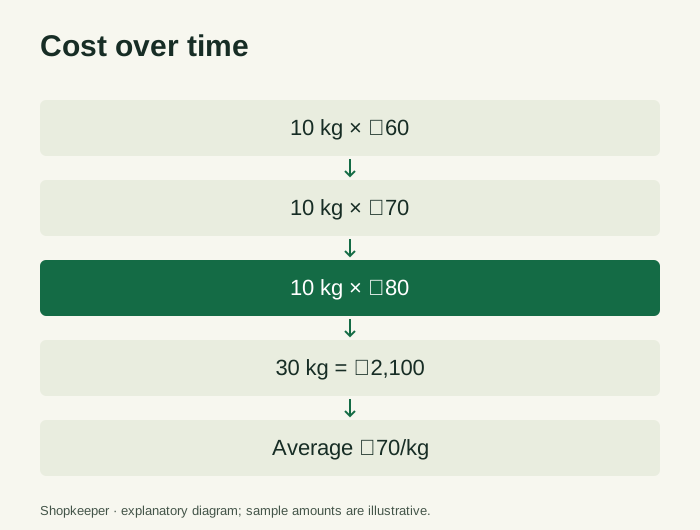
The cost moves with deliveries.

The average cost of the goods still on the shelf follows what you actually paid. Free goods change quantity; freight changes cost.

Your cost follows the shelf.

10 kg × ৳6010 kg × ৳7010 kg × ৳80
30 kg · ৳2,100
Average cost: ৳70/kg
Illustration assumes no sales between these three deliveries. Download diagram ↗

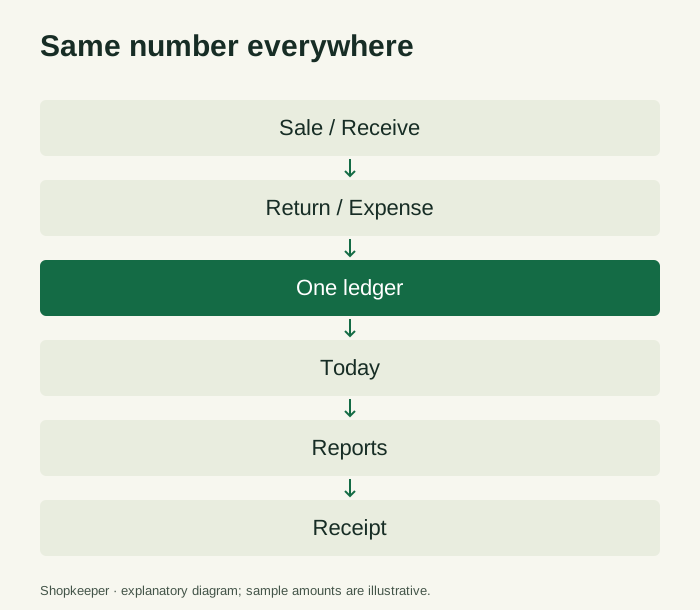
One source for every answer.

Today, reports and receipts read the ledger. Corrections add entries; they do not rewrite yesterday.

Same number everywhere.

SaleReceiveReturnExpense
One ledger
TodayReportsReceipt
Each screen reads the same recorded money. Download diagram ↗

Bring your questions.

Let’s walk through your shop ↗

Worth a look

A few useful ways to see whether Shopkeeper fits your shop.

Open original image ↗